
Mojilac Infant Formula Guide: Understanding Stage 1, Stage 2 & Lactose-Free Options
Choosing how to feed a baby is an important decision, and every infant’s nutritional needs and circumstances can be different.
Breast milk is an important source of nutrition for infants, and international health guidance supports breastfeeding where possible. When infant formula is needed, parents and caregivers should choose an age-appropriate product and follow the advice of a pediatrician or other qualified healthcare professional. WHO also maintains specific guidance around responsible marketing of breast-milk substitutes.
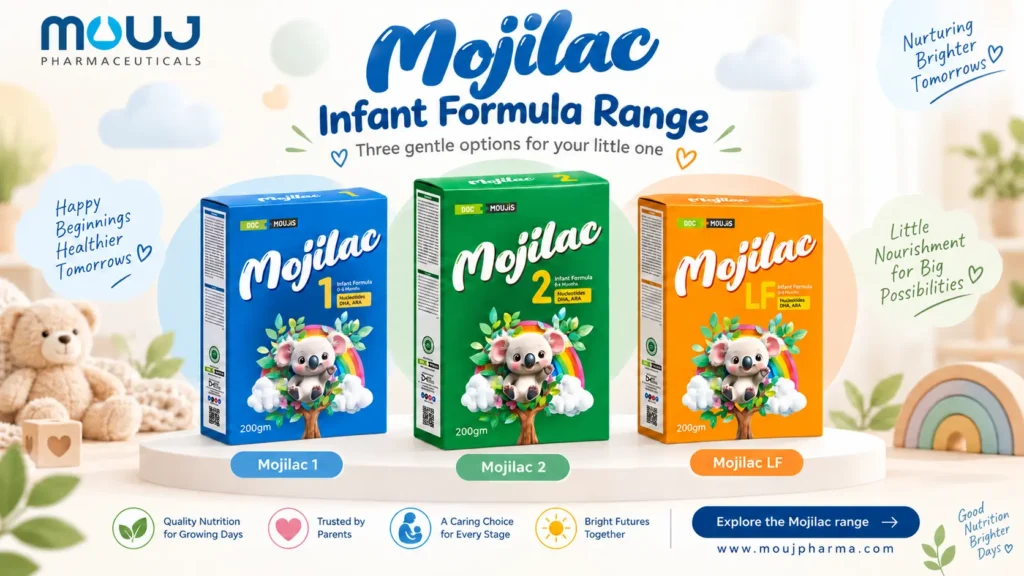
The Mojilac infant formula range from Mouj Pharmaceuticals includes different options designed for particular feeding stages and needs.
This guide explains three products in the range:
- Mojilac 1 – Stage 1
- Mojilac 2 – Stage 2
- Mojilac LF – Lactose-Free
The aim is to help parents understand the differences between the products rather than suggest that one formula is suitable for every baby.
What Is Mojilac Infant Formula?
Mojilac is a powdered infant formula range available in different formulations according to age and nutritional requirements.
The three products discussed here are:
Mojilac 1: intended for infants aged 0–6 months according to the product packaging.
Mojilac 2: intended for babies aged 6–12 months according to the product packaging.
Mojilac LF: a lactose-free infant formula for 0–6 months, according to the packaging, intended for situations where a lactose-free option has been professionally recommended.
The packs also list nutritional components such as DHA, ARA and nucleotides.
However, infant formula should always be selected according to the baby’s age, feeding needs and healthcare advice.
Mojilac 1 – Stage 1 Infant Formula
Who Is Mojilac 1 Intended For?
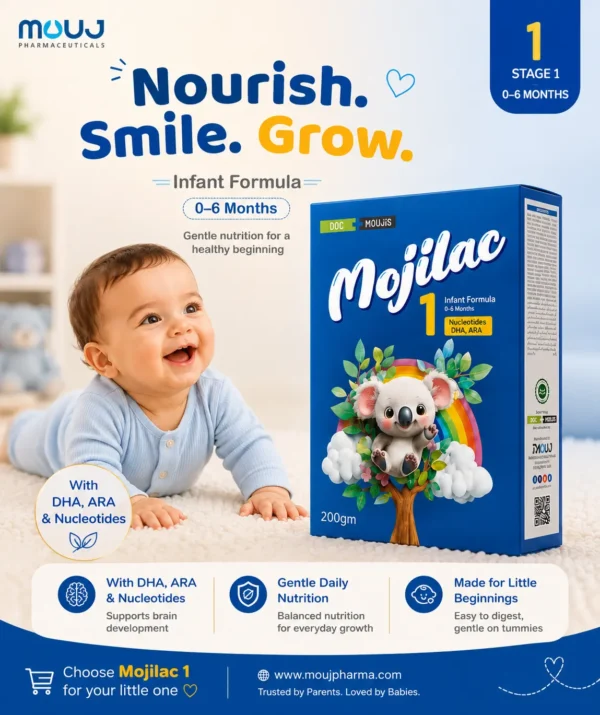
Mojilac 1 is labelled as a Stage 1 infant formula for babies from birth to 6 months.
This is a period of rapid growth and development, so an infant’s nutritional requirements are different from those of an older baby.
If formula feeding is required during this period, parents should use a product specifically formulated for infants rather than ordinary milk or homemade alternatives.
CDC guidance similarly advises choosing formula specifically designed for infants.
Ingredients Highlighted on Mojilac 1
The packaging highlights:
- DHA
- ARA
- Nucleotides
These are nutritional components commonly included in modern infant formulas.
Parents should always read the complete nutrition panel and ingredient list rather than judging a formula only by the claims displayed on the front of the pack.
Important for Babies Under 6 Months
For very young babies, hygiene and correct preparation are particularly important.
Powdered infant formula is not sterile. Extra precautions can be necessary for babies younger than 2 months, premature infants or babies with weakened immune systems.
Parents should follow the preparation instructions printed on the Mojilac pack exactly and speak with a pediatrician if they have any concerns.
Mojilac 2 – Stage 2 Infant Formula
What Is Mojilac 2?
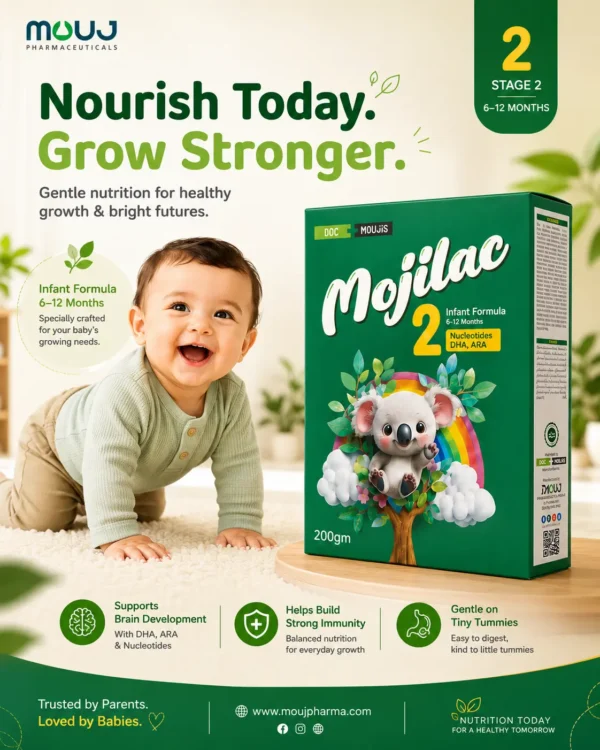
Mojilac 2 is labelled as a Stage 2 infant formula for babies aged 6–12 months.
At around six months, babies generally begin moving into a new stage of feeding as age-appropriate complementary foods are gradually introduced alongside breast milk or formula.
Stage 2 products are formulated with this later feeding period in mind.
How Is Stage 2 Different From Stage 1?
The main difference is the intended age group.
Mojilac 1:
0–6 months
Mojilac 2:
6–12 months
Parents should not switch stages simply because one pack appears to contain more ingredients or makes different marketing claims.
The baby’s age and professional feeding advice should guide the decision.
Nutritional Components
Like Mojilac 1, the Mojilac 2 packaging highlights:
- DHA
- ARA
- Nucleotides
The complete nutrient profile should be checked on the actual product label.
Because infants’ nutritional needs change as they grow, use the formula stage designed for the baby’s current age unless a healthcare professional recommends otherwise.
Mojilac LF – Lactose-Free Infant Formula
What Does “Lactose-Free” Mean?
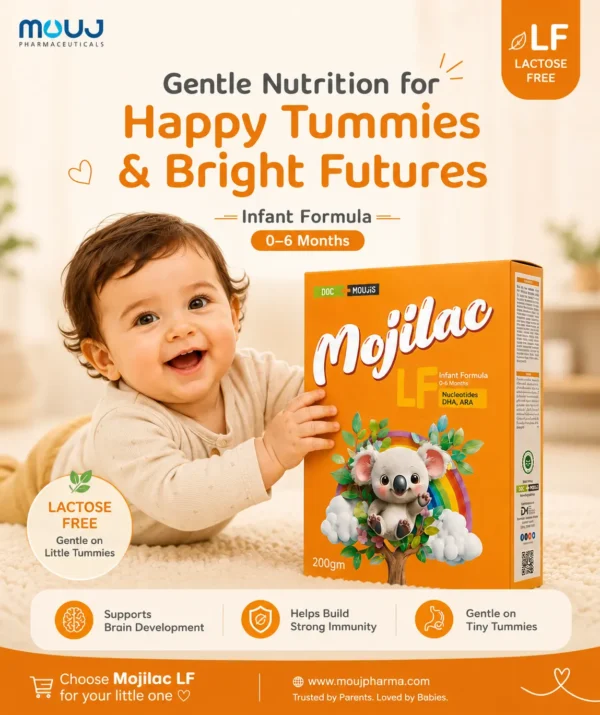
Mojilac LF is labelled as a lactose-free infant formula for babies aged 0–6 months.
Lactose is a naturally occurring sugar found in milk.
A lactose-free formula differs from a standard formula because lactose has been removed or replaced as the primary carbohydrate source, depending on the formulation.
Is Lactose-Free Formula Better for Every Baby?
No.
A lactose-free formula should not automatically be chosen simply because a baby experiences gas, crying or general digestive discomfort.
Infant digestive symptoms can have many causes, and parents should avoid diagnosing lactose-related problems themselves.
If a baby has persistent diarrhoea, vomiting, poor feeding, unusual stools or other ongoing symptoms, speak with a pediatrician before changing formula.
When Might a Lactose-Free Formula Be Considered?
A healthcare professional may recommend a lactose-free feeding option in particular circumstances.
Mojilac LF provides an option within the Mojilac range when a lactose-free infant formula has been advised.
It should not be treated as automatically superior to standard Stage 1 formula.
Mojilac 1 vs Mojilac 2 vs Mojilac LF
| Product | Stage / Type | Age shown on pack | Main distinction |
|---|---|---|---|
| Mojilac 1 | Stage 1 | 0–6 months | Standard Stage 1 infant formula |
| Mojilac 2 | Stage 2 | 6–12 months | Formula for the later infant-feeding stage |
| Mojilac LF | Lactose-Free | 0–6 months | Lactose-free formulation |
The correct choice depends on the baby’s age and individual feeding requirements.
A pediatrician can help determine whether standard or specialized formula is appropriate.
How to Prepare Powdered Infant Formula Safely
Correct preparation is just as important as choosing the appropriate formula.
1. Wash Your Hands
Wash your hands properly before preparing a bottle.
Make sure the preparation surface and feeding equipment are clean.
2. Follow the Pack Instructions Exactly
Always use the exact amount of:
- Water
- Formula powder
- Measuring scoop
recommended on the product label.
Do not add extra powder to make the formula “stronger,” and do not add extra water to make it last longer.
Incorrect dilution can be unsafe for infants.
3. Use Safe Water
Use water from a safe source and follow the preparation directions provided on the formula container.
Extra preparation precautions may be recommended for very young, premature or immunocompromised infants because powdered formula is not sterile.
4. Do Not Microwave Formula
Formula does not need to be warmed.
If warming is preferred, avoid microwaving because it can create hot spots that may burn a baby’s mouth.
5. Use Prepared Formula Promptly
Prepared formula should not remain at room temperature for long periods.
CDC guidance recommends using prepared formula within 2 hours of preparation and within 1 hour after feeding begins. Formula remaining in the bottle after a feed should be discarded rather than reused.
Do Not Switch Infant Formula Frequently Without a Reason
Parents sometimes change formulas repeatedly when a baby experiences:
- Gas
- Crying
- Spitting up
- Changes in stool
- Feeding difficulty
These symptoms do not automatically mean that the formula is unsuitable.
Frequent changes can also make it more difficult to understand what is causing a feeding problem.
If symptoms are persistent or concerning, discuss them with a pediatrician before switching between Stage 1, lactose-free or another specialized formula.
What Parents Should Check Before Choosing Formula
Before purchasing an infant formula, consider:
- Baby’s age
- Product stage
- Complete ingredient list
- Preparation instructions
- Expiry date
- Condition of the packaging
- Storage instructions
- Any allergies or diagnosed conditions
- Advice from a pediatrician
Do not use a container that is damaged, expired or has a broken seal.
CDC also recommends checking that the container is in good condition before use.
Explore the Mojilac Range
Mouj Pharmaceuticals offers different Mojilac formulations for different infant-feeding stages and requirements.
You can learn more about:
Mojilac 1 Stage 1 Infant Formula
For infants aged 0–6 months according to the product label.
Mojilac 2 Stage 2 Infant Formula
For infants aged 6–12 months according to the product label.
Mojilac LF Lactose-Free Infant Formula
A lactose-free option labelled for infants aged 0–6 months.
You can also browse the complete Mouj Pharma Infant Formula Range.
Frequently Asked Questions
What is the difference between Mojilac 1 and Mojilac 2?
The main difference is the intended age stage. Mojilac 1 is labelled for 0–6 months, while Mojilac 2 is labelled for 6–12 months.
What is Mojilac LF?
Mojilac LF is a lactose-free infant formula labelled for babies aged 0–6 months. It should ideally be used when a lactose-free option is considered appropriate by a healthcare professional.
Can I give Mojilac 2 to a baby younger than 6 months?
Use the formula stage appropriate for the baby’s age and follow the product instructions. For a baby younger than six months, seek advice from a pediatrician before using a later-stage formula.
Can I make infant formula stronger by adding extra powder?
No. Always use the exact water-to-powder ratio printed on the product label. Too much or too little water can be unsafe.
Can leftover formula be used later?
Formula left in the feeding bottle after the baby has started drinking should be discarded because bacteria can multiply after contact with saliva.
Medical & Feeding Disclaimer
This article is provided for general educational information only and does not replace advice from a pediatrician or other qualified healthcare professional. Breastfeeding should be supported where possible. If infant formula is required, select an age-appropriate product and follow the product label and healthcare advice carefully. Seek medical advice before using a specialized formula or changing your baby’s regular feeding routine.